

Basement Excavation in Mineral and Charlottesville, VA
The foundation sets the ceiling for everything built above it. Griffith Excavating provides basement excavation in Mineral and Charlottesville, VA with the precision, equipment, and soil knowledge that this phase of construction demands — because a basement dug wrong doesn't just create problems underground, it creates problems for every structural element that follows.
Central Virginia's soil conditions make basement excavation a job that requires local experience. Clay-heavy subsoil. Seasonal moisture variation. Rocky subgrade that appears without warning. Griffith knows what's typically under the ground in this region and plans accordingly.
Basement Excavation Services: What the Work Actually Involves
Griffith Excavating provides excavating services across the full project lifecycle — from raw land through finished grade. Residential builds, commercial developments, municipal infrastructure, contractor site packages. The work gets scoped accurately, mobilized efficiently, and executed without creating problems for the trades that follow.
This is the phase that sets up everything else. Rushing it, or handing it to a crew without the right equipment, is usually how a project gets behind before it starts.
Basement excavation services
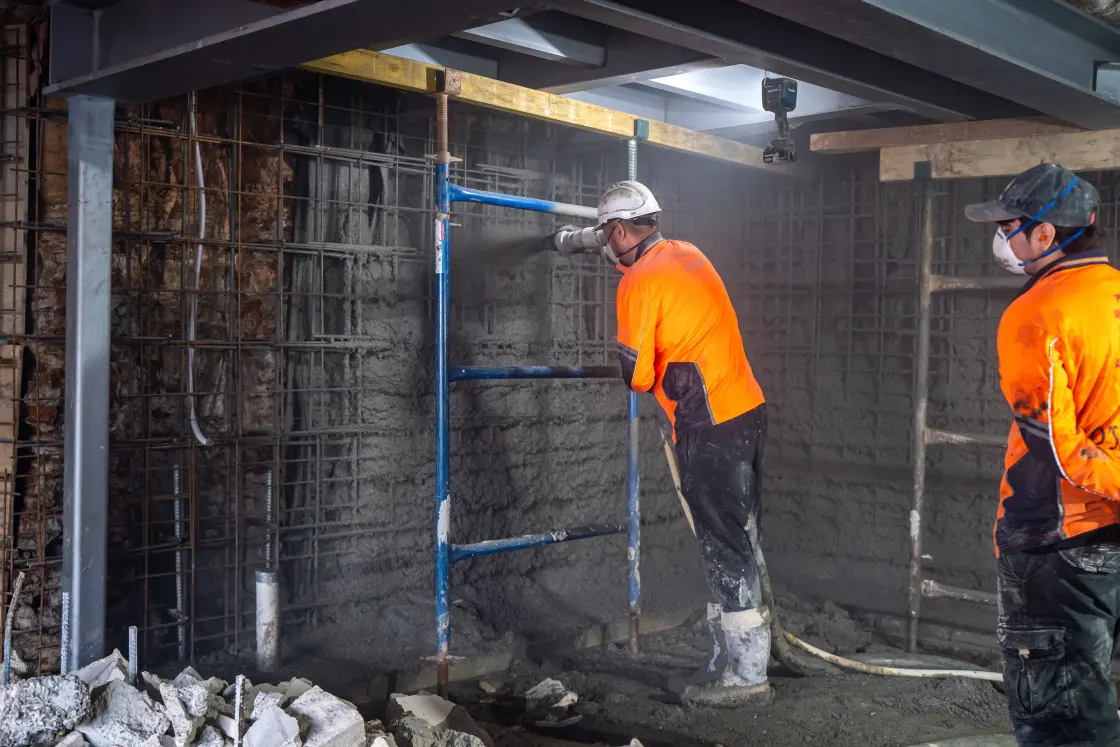
Basement excavation services cover more than digging a hole to a specified depth. Correct bench and slope geometry to prevent wall collapse during the open excavation phase. Spoil management that doesn't compromise adjacent grades or bury drainage swales. Dewatering when groundwater is encountered. Coordination with the foundation contractor so the excavation is handed off in a condition that's actually ready for footing installation.
This is usually where projects run into problems — excavation completed to the wrong dimensions, bearing soil disturbed at the footing elevation, or water management left as someone else's problem. Griffith treats basement excavation as a precision operation from the first cut to the final cleanup.


Residential Basement Excavation
Residential Basement Excavation for New Construction
New home construction in central Virginia increasingly involves full basement foundations — the extra square footage makes sense on rural lots, and the foundation type suits the terrain. Residential basement excavation requires accurate layout, consistent depth control, and careful management of the excavation perimeter to maintain slope stability while the foundation is formed and poured.
Griffith Excavating coordinates directly with builders and foundation contractors to confirm dimensions, bearing depths, and access requirements before the first machine moves. Getting aligned before mobilization saves the kind of rework that costs everyone time and money.
Basement Dig Out for Existing Structures
Basement dig out beneath an existing structure is technically demanding work — lowering the floor of a crawl space or partial basement to full height while the house sits above it. Shoring requirements, soil removal logistics, and structural coordination with the contractor managing the underpinning all have to be addressed in the right sequence.
Most jobs fall apart because of timing, not the work itself. A basement dig out that gets rushed — or handed to a crew without underpinning experience — creates structural risk that's expensive to correct. Griffith approaches existing-structure excavation with the patience and precision the work requires.

Foundation Basement Excavation
Foundation Basement Excavation: Getting the Bearing Elevation Right
Foundation basement excavation is ultimately about one critical
elevation: the bearing surface where the footing meets undisturbed soil. Everything above it — walls, slabs, floors, structure — depends on that bearing being at the right depth, in the right material, and left undisturbed by the excavation process.
Over-digging requires engineered fill. Under-digging requires additional hand work at footing time. Neither is free. Griffith targets the correct bearing elevation and holds it across the full footprint — using grade control technology and experienced operators who understand why that precision matters.
Excavation for Basement Construction: Sequencing the Work
Excavation for basement construction fits into a broader project sequence. Utility locates. Access road establishment. Clearing the building footprint. Topsoil stripping and stockpiling. Bulk excavation to subgrade. Final hand-trimming at footing elevation. Spoil hauling or on-site management. Each step depends on the last being done correctly.
Griffith manages that sequence as a coordinated operation — not a series of independent tasks handed off between crews who don't share site knowledge.
Commercial Basement Excavation
Commercial Basement Excavation for Larger Structures
Commercial basement excavation operates at a scale and under tolerances that residential work rarely demands. Larger footprints create more complex shoring requirements. Greater depths encounter more varied soil profiles. More trades are sequencing around the excavation phase, which means delays compound faster.
Griffith Excavating brings commercial-grade equipment and the project management discipline that commercial timelines require. The excavation phase gets completed on schedule, to specification, with documentation that satisfies the structural engineer and the building inspector.
Basement Digging Services: Equipment and Approach
Basement Digging Services Matched to Site Conditions
Basement digging services require equipment selection based on the specific site — not a one-size-fits-all mobilization. Tight urban lots in Charlottesville need compact excavators that can work within confined access. Rural sites in Mineral with large footprints and ample staging room allow for larger machines that move volume more efficiently.
Griffith selects equipment to match the site geometry, the soil conditions, and the access constraints. Bringing the wrong machine to a basement dig doesn't just slow the work — it creates risk.
Basement Foundation Digging: Managing Soil and Groundwater
Basement foundation digging in central Virginia occasionally encounters groundwater at depths that affect the excavation operation. Perched water tables in clay soils. Springs that weren't visible at the surface. Rock ledges that redirect subsurface drainage into the open excavation.
Griffith monitors conditions throughout the dig and manages dewatering when it's needed — keeping the bearing surface dry enough for the foundation contractor to work and protecting the open excavation from slope instability caused by saturated soil conditions.

Looking for Basement Excavation Near Me?
Searching for basement excavation near me in the Mineral and Charlottesville area means you need a contractor who has dug basements in this region's specific soil conditions — not a general excavator learning your site's geology on your project's timeline and budget.
Griffith Excavating has operated throughout central Virginia's varying terrain. The clay subsoils in Louisa County. The rocky subgrade common in parts of Albemarle. The groundwater conditions that shift seasonally and catch unprepared crews off guard. That regional experience is built into every basement excavation estimate and every mobilization plan.
Basement Excavation Near Me: Choosing the Right Crew
Basement excavation near me searches return a range of results — some experienced, some not. The right crew arrives with a clear understanding of the soil conditions they're likely to encounter, equipment appropriate for the site geometry, a coordinated plan for spoil management and access, and direct communication with the foundation contractor they're setting up for success.
That's how Griffith approaches every basement project — residential, commercial, new construction, or existing structure.

Frequently Asked Questions
-
Most single-family residential basement excavations are completed in one to three days, depending on footprint size, depth, soil conditions, and spoil hauling logistics. Sites with groundwater management requirements or difficult access may extend the timeline. Griffith provides a realistic schedule estimate after assessing the site.
-
Spoil management is part of the scope. Excavated material is either hauled off-site, stockpiled for use as backfill around the foundation, or redistributed on the property for grading purposes — depending on soil quality and the project's needs. Griffith addresses spoil handling in the project plan before mobilization.
-
Directly. Griffith confirms excavation dimensions, bearing depths, access requirements, and sequencing with the foundation contractor before the work begins. That coordination prevents the disconnects — wrong dimensions, disturbed bearing soil, blocked access — that cost both contractors time and the project owner money.
-
Clay-dominant soils throughout Louisa and Albemarle counties require careful slope management in open excavations — clay that becomes saturated loses cohesion quickly. Rocky subgrade is common in parts of the region and may require specialized equipment or blasting coordination. Griffith assesses site-specific conditions before providing a final scope and price.
-
The foundation construction itself requires a building permit, and the excavation is typically covered under that permit. Sites that disturb above a certain acreage may also trigger erosion and sediment control requirements. Griffith advises on what applies to your specific project and jurisdiction before work begins.
Serving Mineral, Charlottesville, and Central Virginia
Griffith Excavating provides basement excavation in Mineral and Charlottesville, VA and throughout Louisa County, Fluvanna County, and surrounding communities. Precision equipment. Regional soil knowledge. Basement excavation that sets up the foundation phase for success.
Contact Griffith Excavating to schedule a site visit and project estimate.
Griffith Excavating works out of 122 Oak Haven Lane, Mineral, Virginia 23117. Call (540) 717-5979 or get in touch online for a free on-site estimate.
